

Service
Domiciliary Care, Home Nursing & Elderly Support
Clinical and personal care delivered where most people would rather recover - their own home. Nursing visits, post-operative support, elderly care and medication management, on a schedule built around the household.
Why home care
Recovery happens at home, whether or not anyone is helping
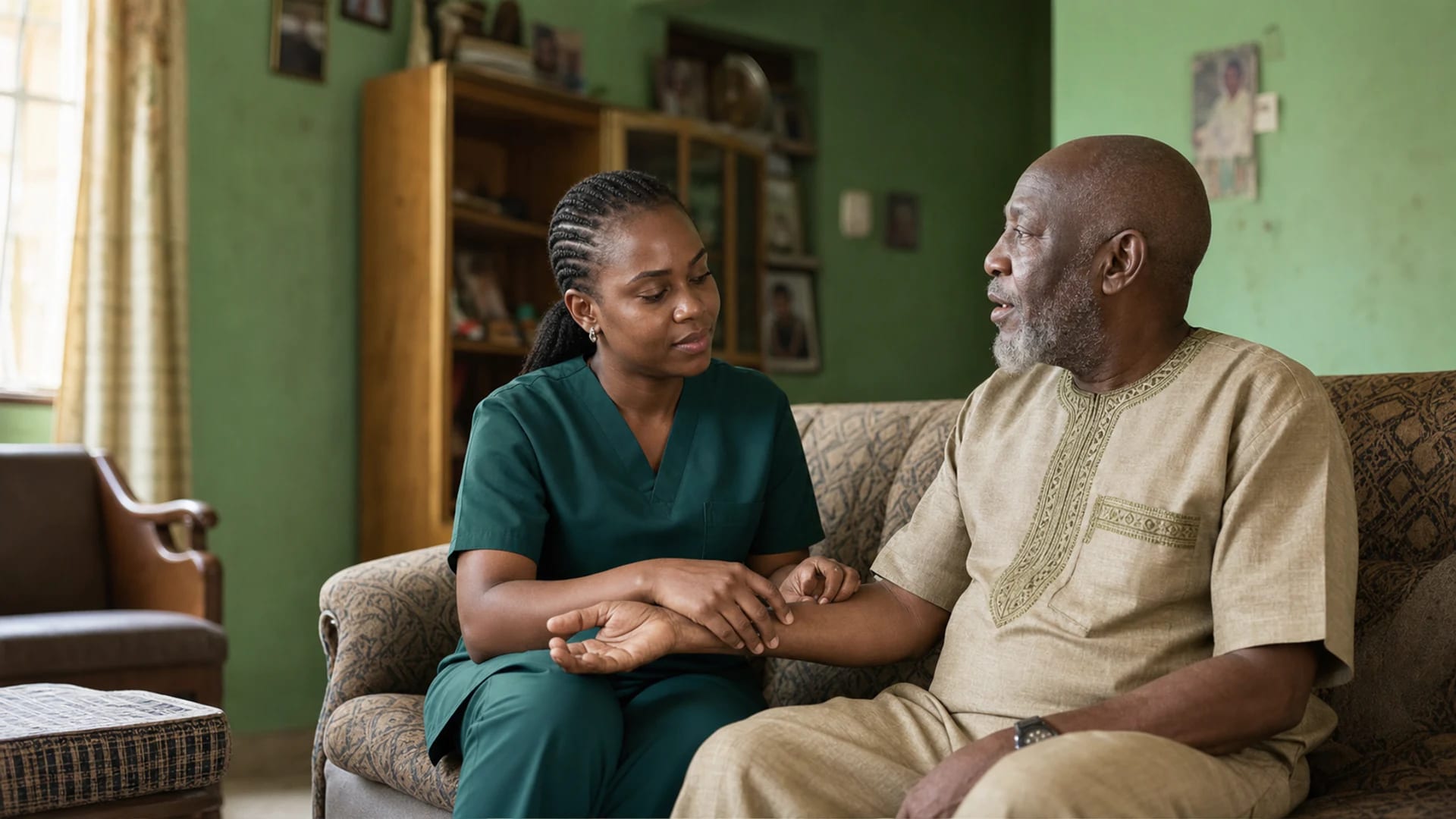
The riskiest part of many illnesses is not the operation or the admission — it is the fortnight afterwards, at home, with nobody clinical watching. Wounds get infected, medicines get muddled, a patient stops mobilising because it hurts, and a readmission that was entirely avoidable happens three weeks later.
Domiciliary care exists to occupy that gap. A nurse who knows the case visits on a schedule, checks the things that actually go wrong, and escalates early to the clinician who assessed the patient in the first place. Because the same organisation holds the record, the transport and the clinical team, escalation is a phone call rather than a negotiation.
It also lets people stay where they want to be. For an older patient, remaining at home with proper support is very often the better clinical outcome as well as the kinder one.
Well suited to
- Patients recently discharged from hospital
- Recovery after surgery or a serious illness
- Older people who want to remain at home
- Patients living with chronic conditions
- Those with limited mobility or who are housebound
- Relatives at a distance arranging care for a family member
At a glance
- Visit length
- Tailored to care plan
- Frequency
- Weekly to several daily
- Delivered by
- Nurses & trained carers
- Covers
- Port Harcourt & Rivers State
- Escalation
- To our own clinical team
What a visit covers
Six kinds of home visit
A care package usually combines several of these, in a mix that changes as the patient recovers.
Clinical nursing visits
Observations, wound care, dressing changes, catheter and stoma care, injections and infusions where appropriate.
Post-operative recovery
The first fortnight after an operation, when most avoidable readmissions happen: wound checks, pain control, mobility and spotting infection early.
Elderly and long-term care
Support with washing, dressing, feeding and mobility, alongside clinical observation for patients living with chronic conditions.
Medication management
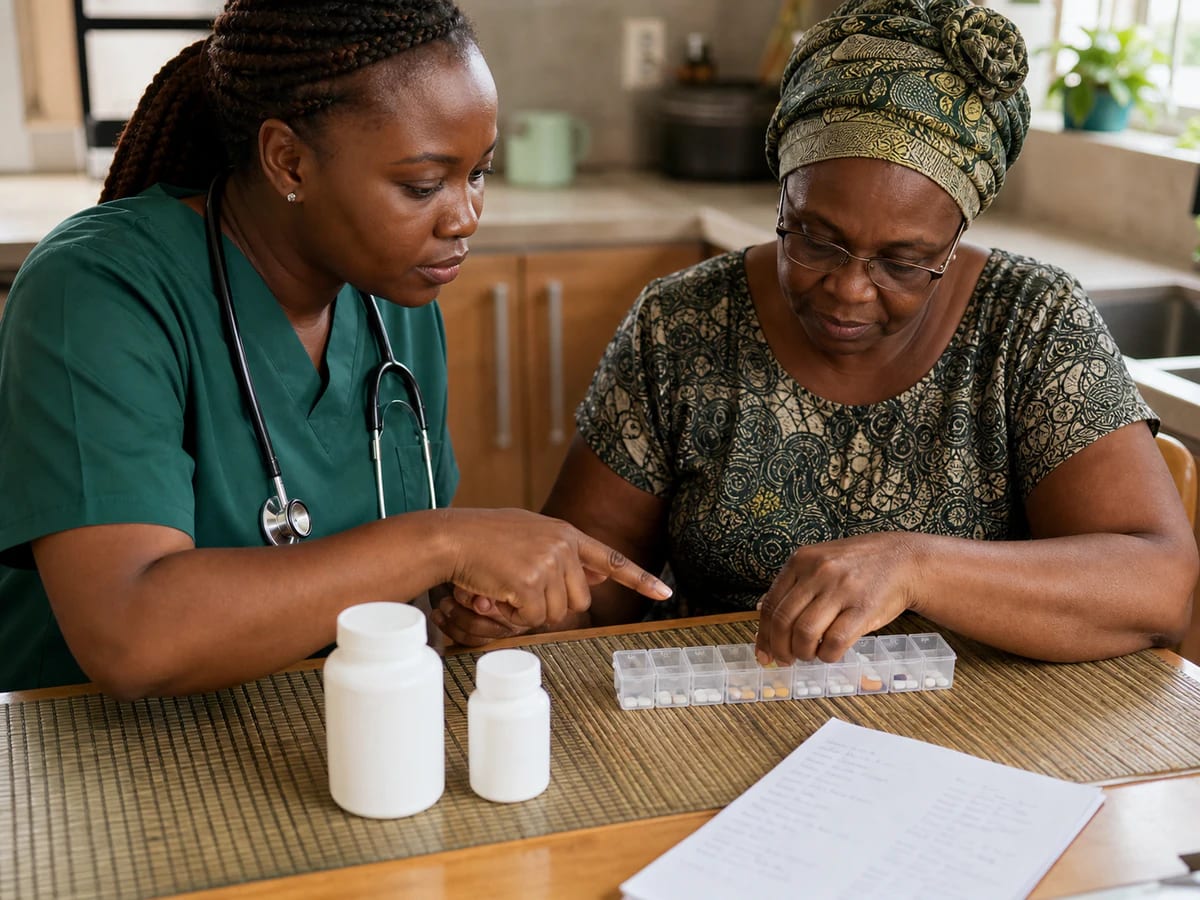
Administering medicines, organising them into a routine that is actually followable, and flagging interactions or side effects to the clinician.
Sample collection at home
Bloods and other samples taken during a visit and carried to our laboratory, so a housebound patient is not left without investigation.
Teaching the family
Showing relatives how to do safely what they will be doing anyway - transfers, dressings, medicines - rather than leaving them to guess.
Getting started
Assessment first, always
We will not sell a care package before someone has seen the patient and the home. A schedule designed on the telephone falls apart in the first week.
- 1
Assessment
A clinician assesses the patient, the home and what the family can realistically manage. It is the only way to build a schedule that survives the first week.
- 2
A written care plan
What will be done, by whom, how often, and what the warning signs are. The family holds a copy; the clinical team works from the same one.
- 3
Visits begin
The named nurse or carer starts, at the agreed times. Continuity of person matters as much as continuity of plan.
- 4
Review and adjust
Recovery is not linear. The plan is reviewed and the visit pattern stepped up or down as the patient changes.
Questions
About care at home
Visit frequency, continuity of carer, escalation, and arranging care from another city or country.
From a single visit a week to several a day, decided by the assessment rather than a fixed package. Post-operative patients often start intensively and step down quickly; long-term care usually settles into a steady weekly pattern.
That is the aim, and we plan rosters around it. A familiar face notices changes a stranger misses, and it matters enormously to an anxious patient. Where cover is unavoidable, the replacement works from the same written plan.
Yes. In addition to daily scheduled visits, we arrange dedicated overnight nursing support and structured extended care packages following an initial clinical assessment.
The nurse escalates to the clinical team immediately, and where necessary our own medical transport is dispatched. Because both services are ours, there is no delay while two organisations negotiate.
Yes - it is one of the more common reasons families contact us. With the patient's consent, we assess, deliver the care and report back to you at agreed intervals. See our telemedicine page for how a consultation from another country works.
Usually, and it is often clinically better for recovery too. We would rather set out the actual costs after an assessment than quote a figure that turns out to be wrong.
Care costs depend on the level of clinical support required, visit duration and frequency. Following our initial clinical assessment, we provide a transparent, written care plan with clear pricing.
Arranging care from another country

Let someone clinical keep an eye on things
Tell us who needs care and what the situation is. We will arrange an assessment and build a schedule that fits the household rather than a package that does not.