

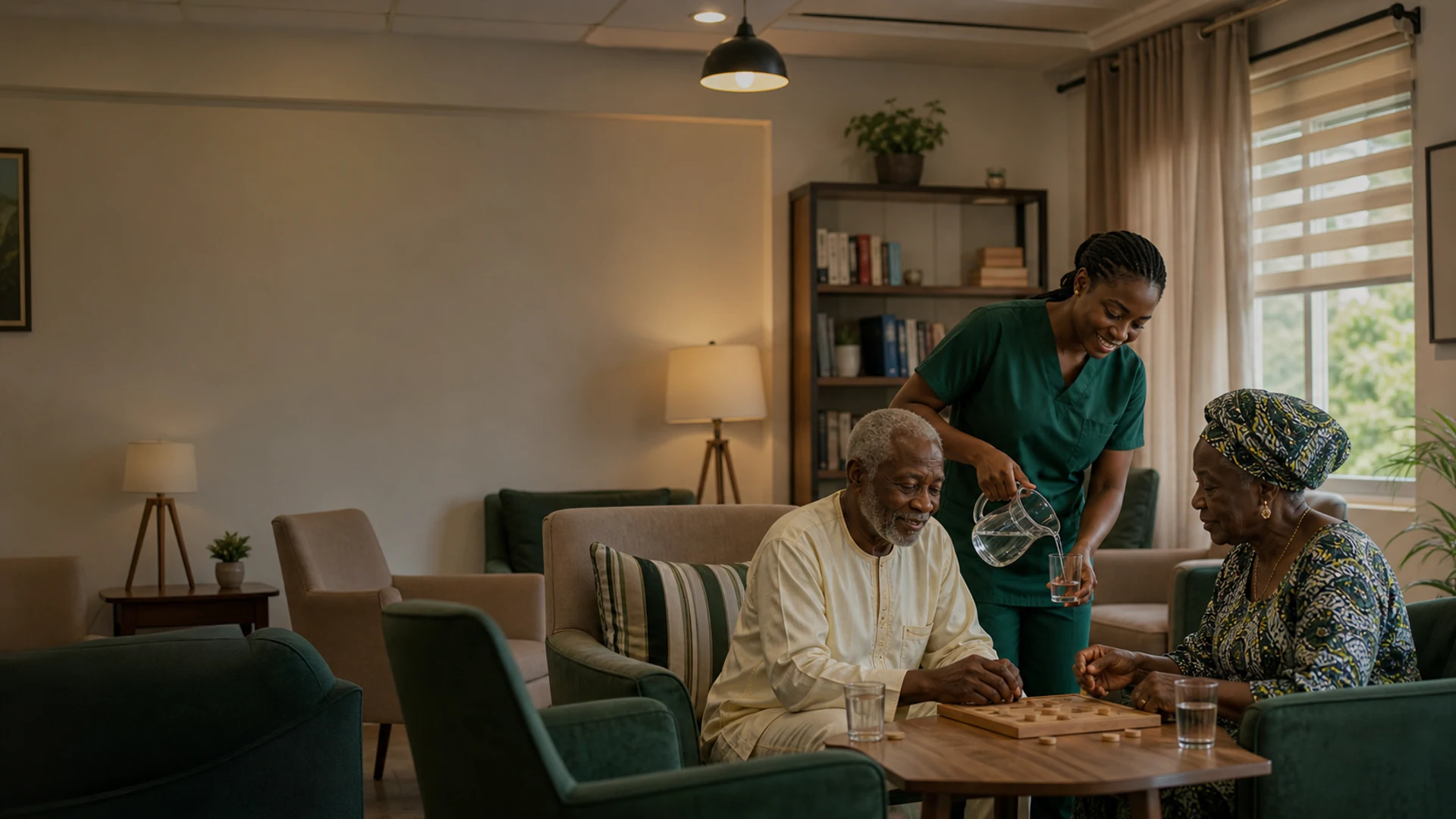
Service
Supported Residential Care
For patients who need continuous professional care in a safe, staffed setting - after a hospital stay, during rehabilitation, or as a longer-term arrangement when care at home is no longer enough.
When it is the right answer
Four situations residential care is designed for
It is not the default. Most people are better at home with support - these are the cases where they are not.
Step-down after hospital
A patient medically fit for discharge but not yet safe at home alone. A short placement bridges the gap instead of forcing the choice between a ward bed and an empty house.
Rehabilitation
Recovery that needs daily input - mobility work, wound care, regaining independence - with staff on hand rather than a visit twice a week.
Longer-term care
Where a condition has progressed beyond what family and visiting carers can safely manage, and continuous supervision is genuinely needed.
Respite
Planned relief for family carers, who are usually holding far more than anyone has acknowledged. A fortnight of proper rest prevents a crisis later.
An honest comparison
What a placement includes
What is provided as standard
A residential placement should feel like living somewhere, not being stored. These are the things we consider baseline.
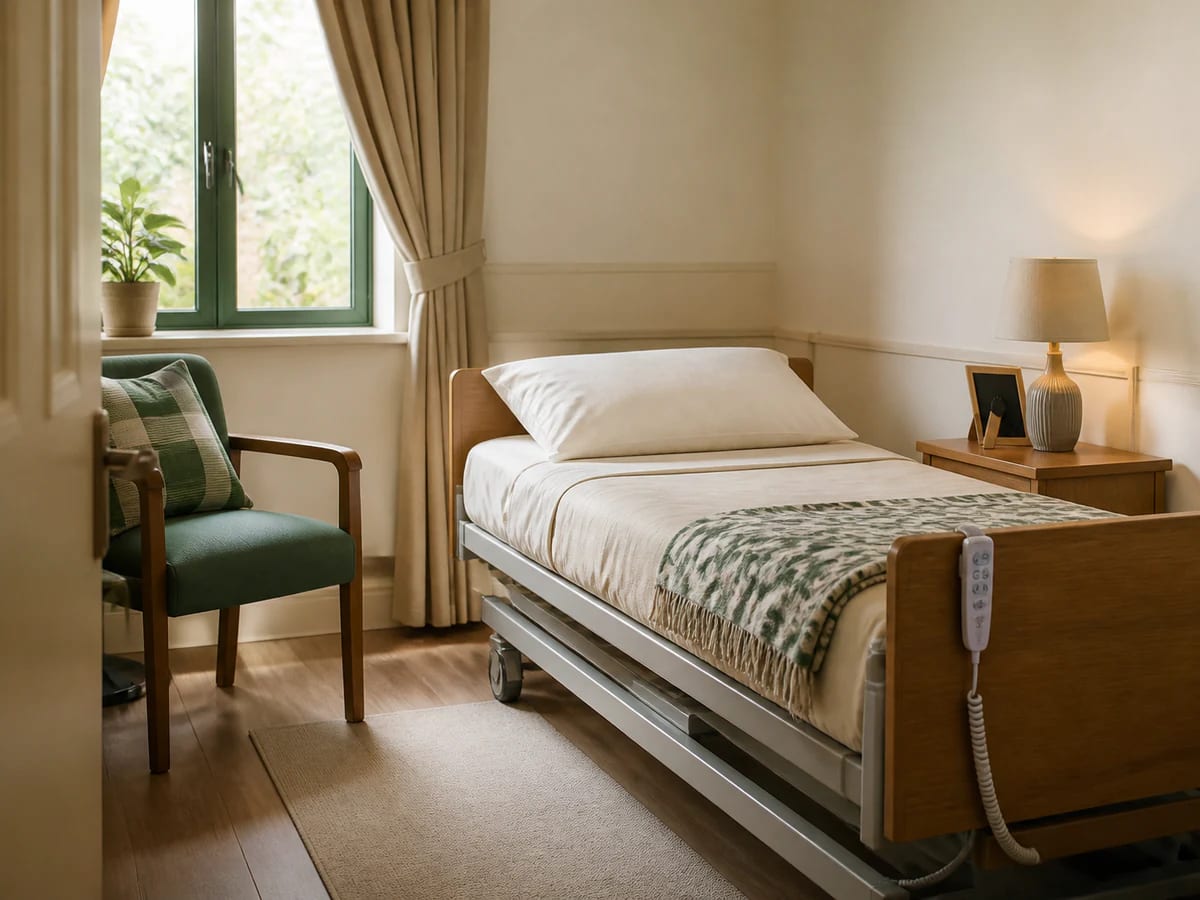
- A private room, kept as the resident's own space
- Continuous supervised care, day and night
- Support with washing, dressing, feeding and mobility
- Medication administration and monitoring
- Meals, with dietary requirements accommodated
- Regular clinical review by our specialists
- Structured family updates at agreed intervals
- Escalation to our own transport and clinical team
What life is like
The shape of a day
Routine is a clinical tool as much as a comfort - it is how medication adherence, mobility and appetite are kept on track. This is the outline a care plan works within.
Morning
Personal care, medicines, observations and breakfast, at the resident's own pace.
Mid-morning
Mobility work, physiotherapy where prescribed, or time in communal space.
Afternoon
Rest, visitors, activities, and any clinical review or dressing changes due.
Evening
Evening meal, medicines, settling routine and handover to night staff.
Overnight
Staff on site, call bell within reach, checks at the interval the care plan sets.
Family updates are scheduled, not requested
Relatives receive updates at agreed intervals, wherever they live. You should not have to chase a clinic to find out how your mother is.
Questions
About residential placements
Length of stay, visiting, escalation, and moving back home again.
From a short respite or step-down placement of a week or two, up to long-term care. The length is set by need and reviewed - a placement should not continue out of inertia once someone could safely be at home.
Yes. Residents are not patients on a ward, and contact with family is part of the care rather than an interruption to it. Visiting arrangements are agreed with each household.
Staff escalate to our clinical team, and our own medical transport takes them to hospital if that is what is needed. Family are informed immediately, not after the event.
Not automatically - for most people, home with good support is better. Residential care is the right answer when a patient needs supervision that visits cannot provide, or when the home itself has become unsafe. We will say honestly which we think applies.
Yes, and that is often the plan from the start. Stepping down to domiciliary visits as someone recovers is a normal and desirable outcome.
We offer private and semi-private rooms equipped with nurse call systems, en-suite accessibility features, and comfortable living areas. Placements are managed carefully to ensure high staff-to-resident ratios.
Placement fees are structured weekly or monthly and cover 24-hour nursing supervision, meals, accommodation and routine clinical care. A clear, itemised quote is provided following clinical pre-admission assessment.
Arranging a visit before you decide

Talk it through before you decide
Placement decisions are rarely straightforward and usually urgent. Tell us the situation and we will give you a straight assessment of whether residential care, home care, or something else is right.