
#15 Ikwerre Street, Mile One, Port Harcourt

+234 803 449 4096+44 7391 189464

Why patients stay with us

The equipment to treat you, and the co-ordination to do it well

Equipment decides what is clinically possible. Co-ordination decides whether it actually reaches the patient. A hospital needs both, and most patients only discover which one is missing when it is too late to change provider.

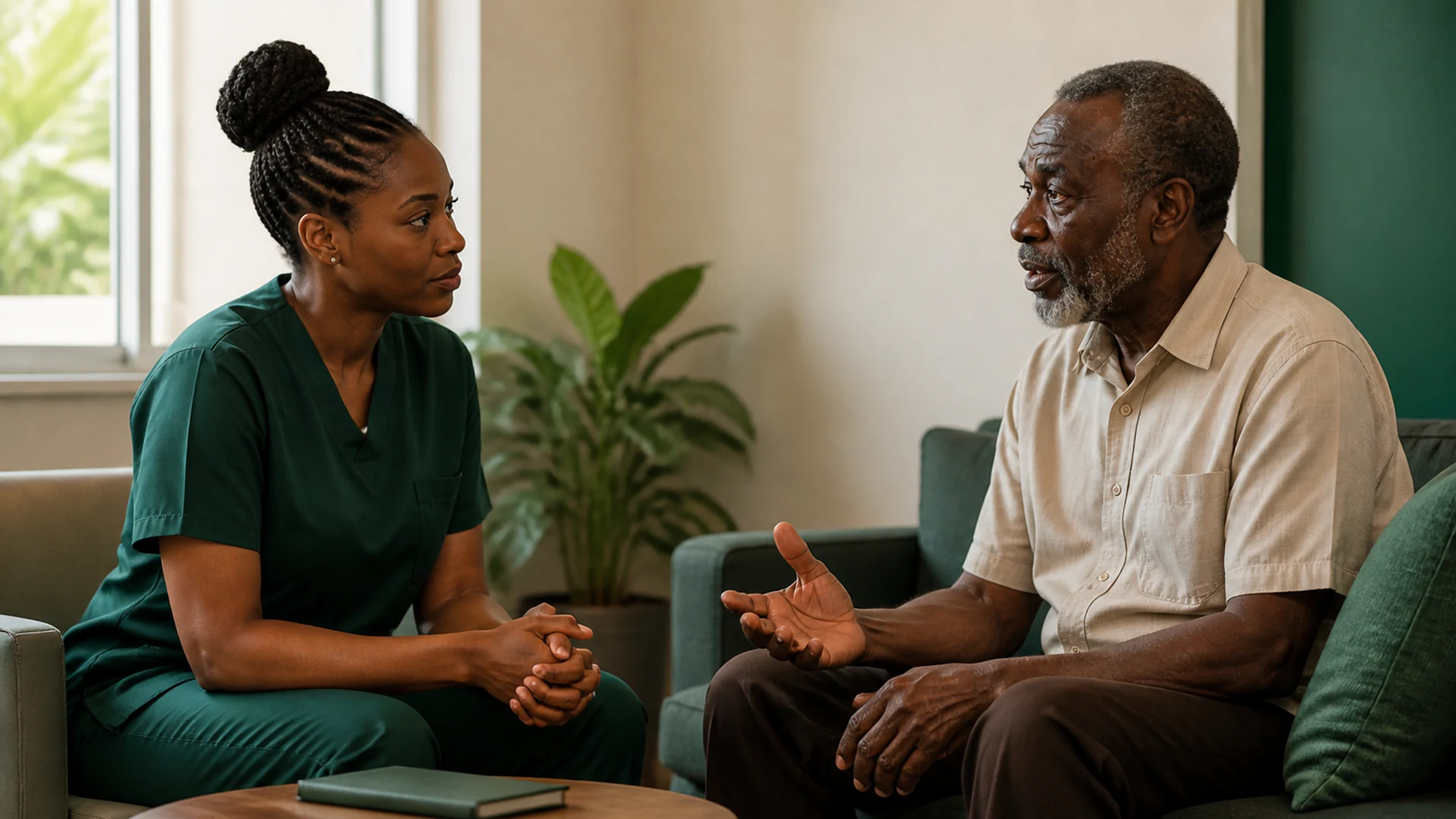
A Care & Cure clinician listening to a patient

Ten concrete reasons

What usually goes wrong, and what we do about it

Each point below starts with a real failure patients describe to us, rather than a claim about ourselves.

  • Without the equipment, nothing else matters.

    Modern equipment, and the people trained on it

    Laparoscopic and hysteroscopic theatre stacks, an embryology laboratory with micromanipulation for ICSI, CT and MRI imaging, ultrasound and a full diagnostic laboratory. Equipment sets the ceiling on what can safely be attempted, and ours is kept current and properly staffed.

    Theatres, embryology laboratory, CT & MRI on site
  • Care usually stops at the clinic door.

    Clinic, theatre, home and vehicle are one service

    A patient can be assessed in clinic, operated on in our theatre, moved by our own crew and nursed at home by the same organisation. Nobody has to re-explain their history at each handover, and no step falls between two providers.

    Ten care lines, one patient record

  • Fertility care is often started before anyone has diagnosed anything.

    Fertility medicine done in the right order

    Both partners fully investigated first, the cause named where there is one, and only then the intervention - IUI, IVF, ICSI or fertility surgery - matched to the findings rather than to a standard package.

    Seven fertility interventions, one diagnosis first

  • Distance decides who gets a specialist.

    Telemedicine is a core service, not a sideline

    A large share of our 10,000+ patients first reached us online. Consultations are scheduled in the patient's own time zone, existing scans and results are reviewed before the call, and the written plan follows afterwards.

    Patients consulted across time zones

  • Emergencies do not keep office hours.

    Medicine, surgery and emergency response run 24 hours

    A resuscitation area, a theatre and an on-call surgical team are available every hour of the year, reached by our own ambulances and rapid-response riders. There is no reduced night service and no closed period at holidays.

    Open 24/7, every day of the year

  • Patients leave without knowing the plan.

    Every consultation ends in writing

    The plan, the prescription and the next step are given to the patient in a form they keep. It is the difference between advice and a treatment that actually gets followed.

    Written plan after every consultation

  • Results arrive as numbers nobody explains.

    Diagnostics sit with the clinicians who ordered them

    Investigation and interpretation are in the same building and the same team, so results are read back to the patient by someone who can act on them the same day.

    Results explained, not just issued

  • Complex cases get passed down a queue.

    Specialists who actually talk to each other

    Where a presentation crosses disciplines, the relevant consultants review it together under the clinical leadership of the founder. The patient meets a decision rather than a referral.

    Multidisciplinary review, not referral roulette

  • Relatives at a distance are left in the dark.

    A named contact for the family

    Where care is being arranged for a relative by someone in another city or another country, one co-ordinator holds the case and reports back at agreed intervals - not a general enquiries inbox.

    One named co-ordinator per case

  • It is hard to know who you are trusting.

    A registered institution, not an arrangement

    Care and Cure Clinics Ltd. has been registered in Nigeria since 19 October 2018 under RC 1533771, with clinical staff practising within their registered scope.

    RC 1533771 · incorporated 2018

Continuity in practice

One journey, followed the whole way

A worked example of how the services hand over - the sequence patients most often arrive needing.

  1. 1

    A patient is discharged from hospital, still weak.

    Our crew collects them and takes them home, not to a taxi rank.

  2. 2

    The discharge summary reaches our clinicians, not a filing tray.

    It is written into the same record the home-care nurse will read.

  3. 3

    A nurse visits, checks observations and the medicines.

    Anything concerning goes straight back to the specialist who reviewed the case.

  4. 4

    Follow-up happens by video, not another journey.

    The patient stays at home; the plan is updated in writing.

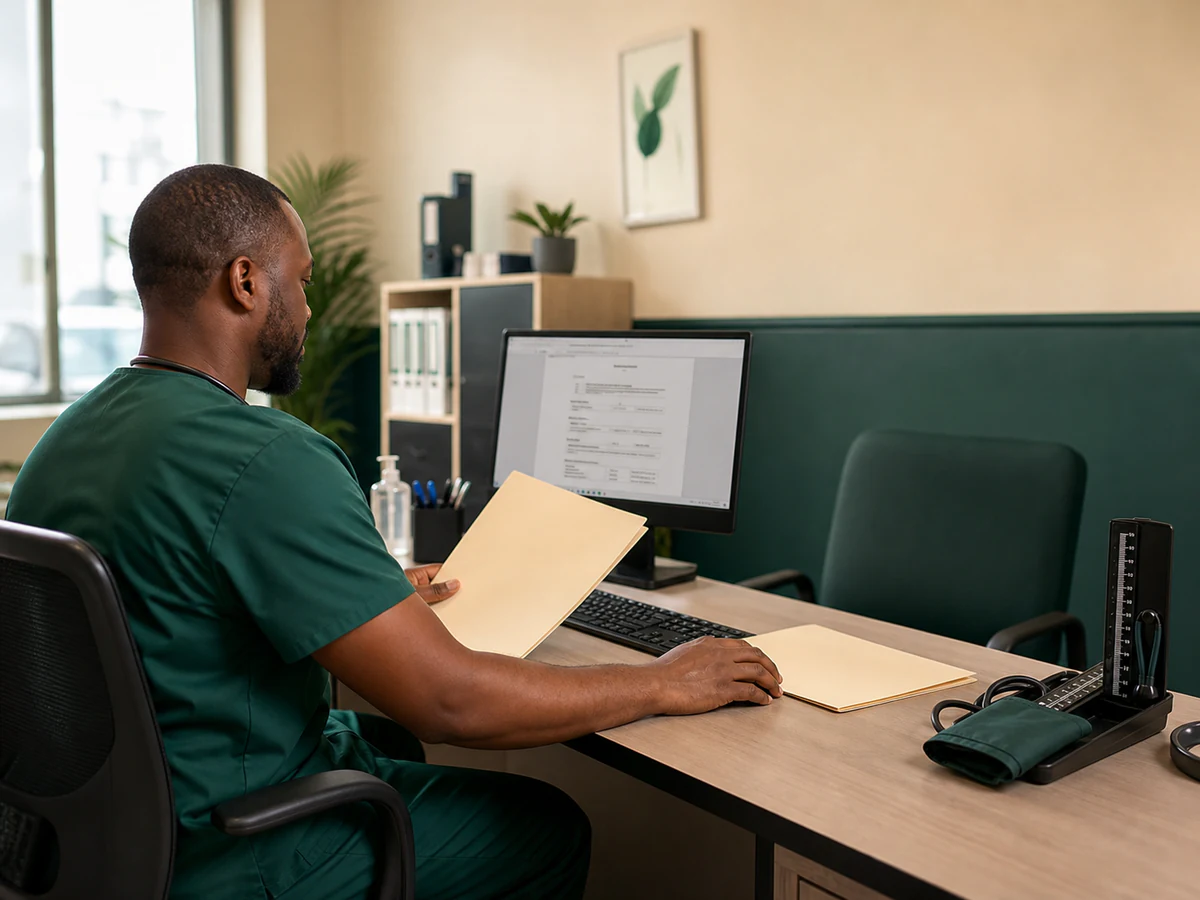
A clinician reviewing a patient's records before an appointment
A Care & Cure nurse arriving at a patient's home

What we will and will not do

Six things we hold to

A short list, written as commitments a patient could hold us to rather than values on a wall.

  • We tell you plainly when something is outside what we provide, and refer you onward.

  • We do not order an investigation we cannot interpret or act on.

  • We give the plan in writing, every time, in language the patient can use.

  • We answer relatives who are entitled to know, wherever in the world they are.

  • We treat a non-emergency transfer with the same care as an emergency one.

  • We publish no outcome figure, fee or success rate that we cannot evidence.

Bring us the problem and we will tell you what it needs

A consultation, an investigation, a second opinion on a result nobody has explained to you, or a fertility assessment for both partners. Whichever it is, you will leave with a written plan.